Foam-topped · finish each cup to order
Salted Cheese Foam Milk Tea
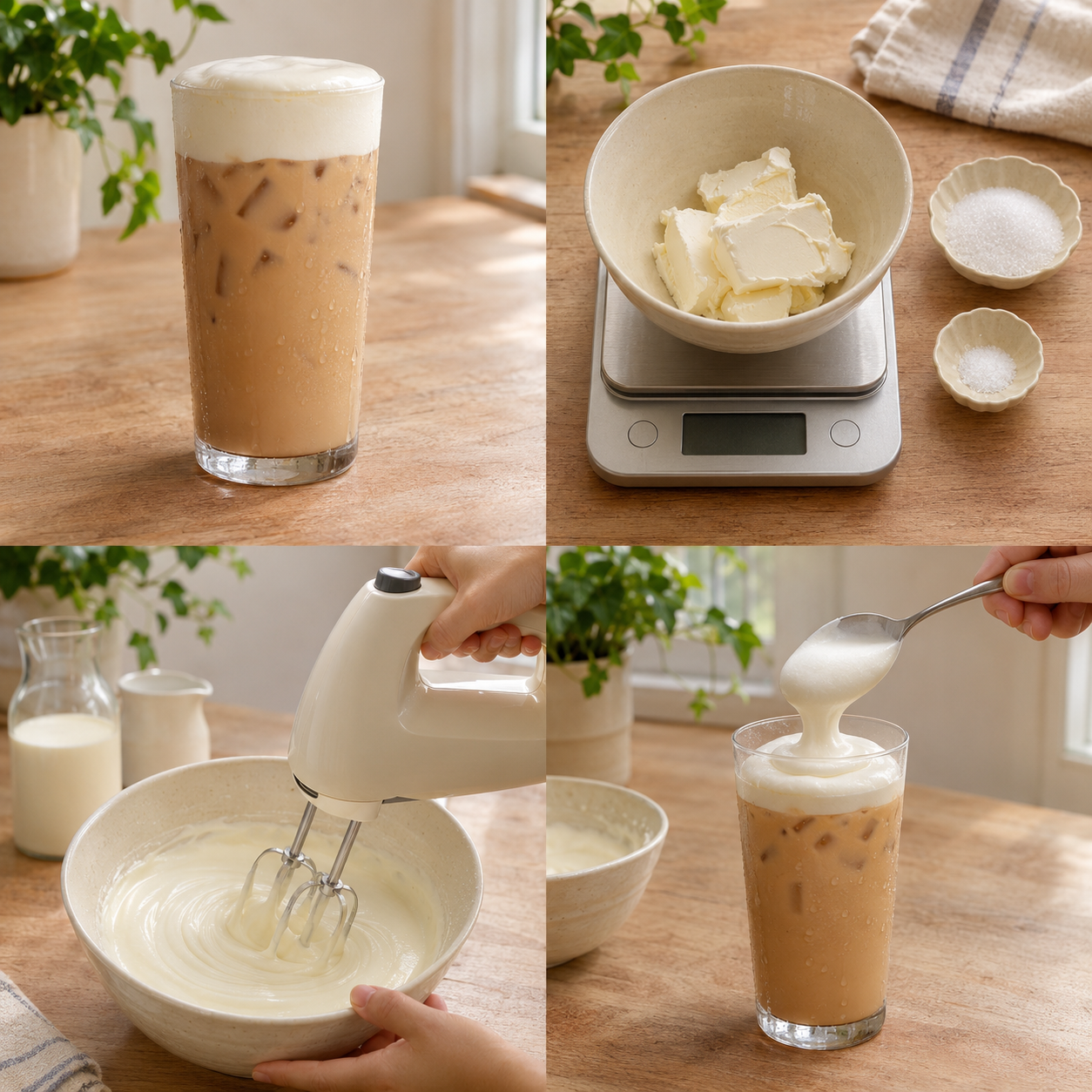
Prepare a black milk tea base and a separate pourable cheese foam. Keep the two batches distinct and cap each cup at serving time rather than mixing foam into the main jug.
Starting adaptation, not a tested yield. The listed quantities and reserved ice space are our starting planning assumptions, not the source recipe’s measured serving size. A trial must verify consistency, finished foam volume, mixer residue and actual cup fill. No universal make-ahead or holding time is supplied. The table plans a 500 mL cup; the 12-cup column excludes an extra buffer.
Ingredients for one cup and 12 cups
| Ingredient | 1 cup | 12 cups |
|---|---|---|
| Filtered black tea | 200 mL | 2400 mL |
| Milk | 120 mL | 1440 mL |
| Heavy whipping cream | 30 mL | 360 mL |
| Simple syrup | 15 mL | 180 mL |
| Plain cream cheese | 15 g | 180 g |
| Granulated sugar | 3 g | 36 g |
| Fine salt | 0.1 g | 1.2 g |
| Ice space, not weight | About 60 mL | About 0.72 L |
Liquid amounts and occupied cup volume are different. Powder and toppings change fill; test the actual cup and lid. Measure ice weight separately instead of treating milliliters of reserved space as grams.
Equipment and purchasing
Small-quantity scale, measuring jug, tea strainer, electric hand mixer, mixing bowl, separate foam container, serving spoon. Also prepare compatible cups, lids, straws, labels and paper towels.
Subtract usable stock from the net requirement, then round up to whole packs. Read ingredient and allergen labels on the actual products. Check the ingredient guide →
Method and batch order
- Prepare and filter black tea using its product instructions, then measure 200 mL for the base. Mix it with 100 mL of the milk and 15 mL syrup. Reserve the other 20 mL milk for the foam; the shopping table lists all 120 mL together. Prepare a separate measured trial rather than adding this recipe to an existing full cup of classic milk tea.
- Weigh 15 g plain cream cheese, 3 g sugar and 0.1 g fine salt into a mixing bowl. Beat until smooth, then gradually mix in the reserved 20 mL milk and 30 mL heavy whipping cream. Stop when the mixture forms a soft, pourable cap. A scale that cannot resolve the salt amount should not be used to guess that amount; trial a larger measured foam batch instead. Tare a clean receiving container, then record recovered foam mass, finished foam volume and the amount left on the beaters and bowl. Mass alone does not show how much cup space the aerated foam occupies.
- Trial the actual 500 mL cup with the planned base, ice and foam. Start with about 60 mL reserved ice space, not 100 mL, because foam needs headroom. Spoon the foam on last. Aeration and bowl residue change volume and yield: do not force the full amount into a cup that is already full. Record the usable portion and adjust the next trial before scaling. Keep reserve dairy under its product-specific conditions and finish each cap as the cup is handed out.
Scale ingredient amounts by the confirmed cup count, but do not multiply brewing or cooking times by guest numbers. Follow the selected product instructions for preparation and holding.
Hosting and refilling
Before shopping, confirm guest preferences and ingredient restrictions. Make a trial cup before calculating batches. Keep each jug within its working capacity and label it “Salted Cheese Foam Milk Tea” with the actual milk and sweetener information.
Arrange cups, toppings, drinks and napkins in order. Assign one refill point away from the guest queue. For this recipe, check the specific preparation bottleneck: small-quantity scale and the tools listed above must be available when their step begins.
Keep reserve ingredients under their product-specific conditions. Record actual cups served and remaining ingredients rather than assuming the planning amount is a measured yield.
Batch workstations and serving order
This is a two-station drink. One person can measure the tea base while another caps cups; with one host, finish a small group of cups before starting the next group. Do not pre-cap the full guest allocation merely to make the serving table look full.
Split the milk deliberately: 100 mL per cup goes into the tea base and 20 mL into the foam. For 12 cups this is 1,200 mL plus 240 mL, or 1,440 mL total. The combined shopping list shows one milk total, while the workstations need those separate allocations.
The tea-base portion is 315 mL per cup, or 3,780 mL for 12 cups. The foam inputs are counted separately; their mass and liquid inputs do not determine the whipped finished volume. Trial the mixer’s working quantity, measure the usable result and note residue left on the beaters and bowl.
Before guests arrive, arrange measured base, cups, a separate foam container and a dedicated spoon. Keep a clear handoff point so the person carrying cups does not reach across the mixer. Use suitable cups or lids with enough space for the cap.
The base recipe already contains a dairy cap. Optional pearls, pudding or jelly are not automatically added by the planner for this drink; this avoids making an untested space assumption. If offering another topping, build a new trial cup and adjust base and ice explicitly.
The default 60 mL ice figure is reserved cup space, not an ice weight or a cooling claim. It differs from the other recipes, so check both the per-drink ice row and the combined ice-space row when mixing menus.
Troubleshooting and adjustments
Lumps: smooth the cheese before adding the rest of the dairy. A dense, non-pourable cap: check mixing stage and the product used; trial a measured milk adjustment in a separate bowl, not the whole party batch. A watery cap: check the cream and cheese specifications and avoid repeatedly adding unmeasured liquid. Overflow: reduce the next cup’s base or ice after measuring the actual foam portion, rather than discarding a different amount from every cup.
Change one variable per trial. Record the product, amount, actual fill and result. Do not infer allergen suitability or storage life from the appearance of a drink.
Add this drink to your party
Plan quantities for this drink ↗Method references and recipe status
- Dairy Farmers of Washington: Cream Cheese Foam Tea
Supports the ingredient family and the method of smoothing cheese, adding milk and cream, and applying a pourable cap. The quantities and party calculations here are an untested adaptation, not a claim that the source validated them.