Brewed tea · shared basic method
Oolong Milk Tea
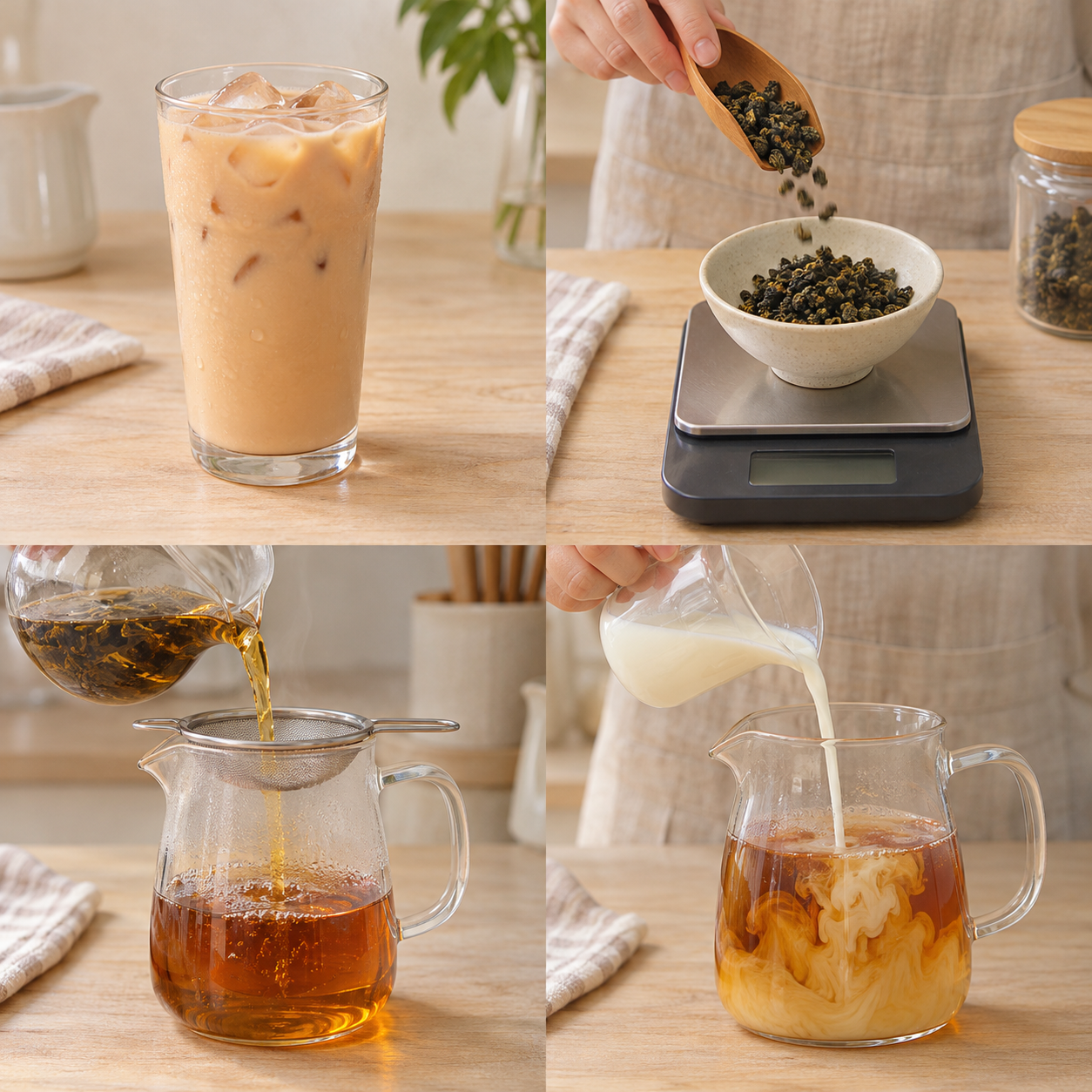
Use the same batch workflow as classic milk tea, but follow the instructions for your oolong product rather than copying black-tea brewing parameters.
Starting formula, not a tested yield. Trial one cup with the exact products you will use. The table plans a 500 mL cup; the 12-cup column excludes an extra buffer.
Ingredients for one cup and 12 cups
| Ingredient | 1 cup | 12 cups |
|---|---|---|
| Filtered oolong tea | 225 mL | 2700 mL |
| Milk | 150 mL | 1800 mL |
| Simple syrup | 25 mL | 300 mL |
| Ice space, not weight | About 100 mL | About 1.2 L |
Liquid amounts and occupied cup volume are different. Powder and toppings change fill; test the actual cup and lid. Measure ice weight separately instead of treating milliliters of reserved space as grams.
Equipment and purchasing
Scale, timer, brewing vessel, fine strainer, measuring jug, serving jug. Also prepare compatible cups, lids, straws, labels and paper towels.
Subtract usable stock from the net requirement, then round up to whole packs. Read ingredient and allergen labels on the actual products. Check the ingredient guide →
Method and batch order
- Prepare oolong tea according to its product instructions. Record dry leaves, starting water and filtered yield.
- Trial the tea with milk and syrup. Assess the tea and milk balance before changing the proportion of a single ingredient.
- Label the oolong jug clearly. If preparing black tea as well, keep the two bases separate and confirm the extra batch fits the equipment schedule.
Scale ingredient amounts by the confirmed cup count, but do not multiply brewing or cooking times by guest numbers. Follow the selected product instructions for preparation and holding.
Hosting and refilling
Before shopping, confirm guest preferences and ingredient restrictions. Make a trial cup before calculating batches. Keep each jug within its working capacity and label it “Oolong Milk Tea” with the actual milk and sweetener information.
Arrange cups, toppings, drinks and napkins in order. Assign one refill point away from the guest queue. For this recipe, check the specific preparation bottleneck: scale and the tools listed above must be available when their step begins.
Keep reserve ingredients under their product-specific conditions. Record actual cups served and remaining ingredients rather than assuming the planning amount is a measured yield.
Troubleshooting and adjustments
If the tea character is lost, review the base strength first. Trial a smaller milk share with a measured increase in tea instead of making several changes together.
Change one variable per trial. Record the product, amount, actual fill and result. Do not infer allergen suitability or storage life from the appearance of a drink.