Coffee and tea · measure two brewed bases
Yuenyeung Coffee Milk Tea
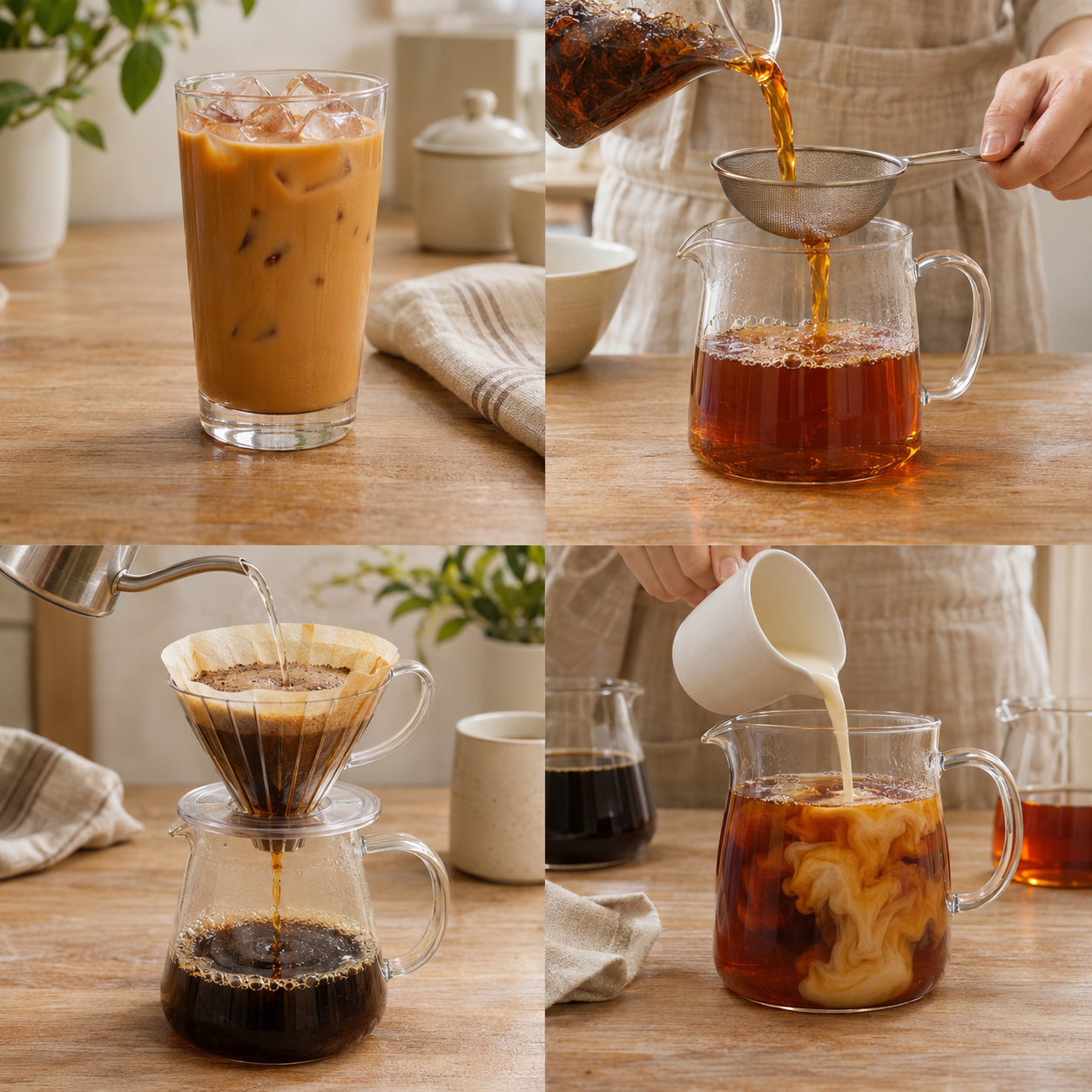
Brew coffee and black tea separately, measure each finished yield, then blend with evaporated milk. A dual-base workflow makes the coffee–tea balance adjustable without changing every ingredient at once.
Untested starting formula for an iced party serving. Sources support the coffee, tea and evaporated-milk drink family, not these specific amounts or a measured yield. Confirm both brewed bases, dairy product, sweetness and actual cup fill before preparing a batch. The table plans a 500 mL cup; the 12-cup column excludes an extra buffer.
Ingredients for one cup and 12 cups
| Ingredient | 1 cup | 12 cups |
|---|---|---|
| Filtered black tea | 180 mL | 2160 mL |
| Brewed filtered coffee | 120 mL | 1440 mL |
| Unsweetened evaporated milk | 80 mL | 960 mL |
| Simple syrup | 20 mL | 240 mL |
| Ice space, not weight | About 100 mL | About 1.2 L |
Liquid amounts and occupied cup volume are different. Powder and toppings change fill; test the actual cup and lid. Measure ice weight separately instead of treating milliliters of reserved space as grams.
Equipment and purchasing
Scale, tea brewing vessel, tea strainer, product-appropriate coffee brewer and filter, two labeled measuring jugs, serving jug, stirring spoon. Also prepare compatible cups, lids, straws, labels and paper towels.
Subtract usable stock from the net requirement, then round up to whole packs. Read ingredient and allergen labels on the actual products. Check the ingredient guide →
Method and batch order
- Prepare black tea according to the selected tea product and brewing equipment. Filter it and measure 180 mL finished tea for the trial cup. Record leaf weight, starting water and actual filtered yield separately. Keep this jug labeled tea; the listed amount is not a starting-water instruction and not already sweetened milk tea.
- Prepare coffee separately using the chosen brewer and coffee instructions, then filter where appropriate and measure 120 mL finished coffee. Label the second jug coffee. Do not substitute 120 mL espresso or an arbitrary instant-coffee concentration without a new trial. The preparation reference uses a particular combined-brewing appliance; its settings do not establish parameters for this separate-brewing workflow.
- Combine the measured tea and coffee, then stir in 80 mL unsweetened evaporated milk and 20 mL syrup. Trial the actual 500 mL cup with about 100 mL reserved ice space and check the lid fit. If coffee dominates, change the coffee-to-tea split in a separate trial while keeping their combined 300 mL constant. Record the final split before scaling; the planner continues to use this starting formula until its ingredient data are revised.
Scale ingredient amounts by the confirmed cup count, but do not multiply brewing or cooking times by guest numbers. Follow the selected product instructions for preparation and holding.
Hosting and refilling
Before shopping, confirm guest preferences and ingredient restrictions. Make a trial cup before calculating batches. Keep each jug within its working capacity and label it “Yuenyeung Coffee Milk Tea” with the actual milk and sweetener information.
Arrange cups, toppings, drinks and napkins in order. Assign one refill point away from the guest queue. For this recipe, check the specific preparation bottleneck: scale and the tools listed above must be available when their step begins.
Keep reserve ingredients under their product-specific conditions. Record actual cups served and remaining ingredients rather than assuming the planning amount is a measured yield.
Batch workstations and serving order
This menu item needs two brewing schedules, not just a second milk choice. Check the tea vessel and coffee brewer capacities independently. If they share a kettle, arrange the brewing tasks in sequence and do weighing, labeling and cup setup alongside them. Do not multiply brew times by the number of guests.
For 12 cups, plan 2,160 mL filtered tea and 1,440 mL brewed coffee, or 3,600 mL combined base. Add 960 mL unsweetened evaporated milk and 240 mL syrup for 4,800 mL planned liquid. The 1,200 mL reserved ice space is separate from that liquid total and is not an ice purchasing weight.
Work backward from each brewer’s measured usable output. If a coffee setup yields 600 mL per confirmed batch, 1,440 mL requires three batches, with the final batch covering the remaining need. This is scheduling arithmetic, not a claim about an untested brewer’s capacity, extraction ratio or preparation time.
Dry coffee and tea purchasing amounts are not printed in the calculator because product ratios, equipment and retention vary. Use your trial records and product instructions to convert the finished liquid needs into beans or grounds, dry leaves and starting water. Keep coffee filters on the equipment list rather than discovering the shortage after brewing begins.
For evaporated milk, read the actual carton or can label and measure the portion in milliliters if the package provides a compatible volume measure. A package labeled only in grams cannot be treated as the same number of milliliters. Sweetened condensed milk is a different ingredient; the syrup and dairy amounts cannot be copied unchanged for that substitution.
At the serving point, label the jug coffee and black tea with the actual milk ingredient. Do not describe it as caffeine-free or invent a caffeine amount: both brewed bases vary. Keep reserve dairy and prepared ingredients under their product-specific conditions, and use the separate plain-tea menu entry for guests who choose a drink without added coffee.
Once a trial blend is agreed, mix small measured serving batches for consistent cup-to-cup ratios. Keep the unmixed reserve bases labeled so a later refill does not accidentally become all coffee or all tea. If adding an optional topping, recheck cup fill and explicitly revise the next trial’s liquid or ice amount.
Preparation checkpoints
| When | Task | Ready to proceed when |
|---|---|---|
| Before shopping | Confirm cup, dairy product and coffee/tea preferences. Trial each brewed base and one blended cup. | Record both finished yields, actual ice weight and agreed blend. |
| Before guests arrive | Sequence shared kettle tasks, brew and filter separately, then measure labeled reserve bases. | Tea and coffee yields cover the planned serving batch; cups, filters and refill space are ready. |
| At the first pour | Mix a measured small batch with the chosen evaporated milk and syrup. | The actual cup and lid fit; ingredient labels match the batch. |
| During refills and after serving | Track cups served, mix the next measured batch only as needed, and follow product holding instructions. | Log shortages, unused bases, dairy, spills and the next adjustment; no unmeasured shelf life is assumed. |
Shopping and post-party review
| Item | 12-cup net plan | Purchase and review record |
|---|---|---|
| Black tea | 2,160 mL finished, filtered tea | Record dry leaf or bag mass, starting water, trial yield, usable stock and packs bought. |
| Coffee | 1,440 mL finished, brewed coffee | Record dry coffee, brewer yield, filters, batch count and any unused brewed base. |
| Unsweetened evaporated milk | 960 mL | Record product, compatible volume measure, usable stock, cans opened and remaining milk. |
| Simple syrup | 240 mL | Record brand or concentration, stock, amount used and the next trial adjustment. |
| Ice | 1,200 mL reserved cup space; weight not established | Weigh the actual trial portion before buying; log ice used and melt separately. |
| Cups, lids and service tools | 12 compatible cup/lid sets; tools based on actual workstations | Count usable stock and spares separately; check filters, labels, jugs and stirring tools. |
Subtract usable stock, then round purchases to actual pack sizes. After serving, record bought, used, remaining and spilled amounts; these are blank records until you measure them.
Troubleshooting and adjustments
Coffee overwhelms tea: trial a lower coffee share and an equal increase in tea, with the combined base volume held constant. Bitter or harsh: inspect the two bases separately and their brewing records before adding more syrup. Thin after ice: confirm the finished brewed yields and trial the actual ice portion; do not count starting water as finished coffee or tea. Inconsistent cups: premix a measured batch of both bases before portioning, rather than free-pouring two different jugs into every cup.
Change one variable per trial. Record the product, amount, actual fill and result. Do not infer allergen suitability or storage life from the appearance of a drink.
Add this drink to your party
Plan quantities for this drink ↗Method references and recipe status
- Qi Aerista: How To Brew Coffee With Tea (Yuenyeung)
A brewer manufacturer’s recipe confirms black tea, coffee and evaporated milk. It prepares them using a particular combined-brewing appliance. Our separately measured bases, quantities and party workflow are an untested adaptation; its appliance time and temperature are not copied as universal instructions.
- Hong Kong Tourism Board: Lan Fong Yuen
Confirms yuen yeung as coffee mixed with tea in a Hong Kong cafe context. This is background for the drink name, not verification of our formula, yield or any affiliation.